
Click here to view this post in its original form (with images) on Substack
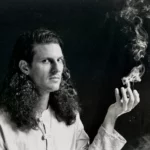
In the final moments of HBO’s widely watched new docu-series The Mortician, convicted felon and disgraced mortician David Sconce starts to tell a story about being held up at gunpoint. When a crew member interrupts and informs the director that they have to reload the camera, Sconce cheekily says that he’ll have to finish the story off-camera anyway… provided the director promise not to tell. Then, unprompted, like a little boy holding onto a secret that feels bigger than the Earth itself, he implies that there are two more incidents that he’ll only share off-camera. The director reels back, saying that he’s not interested, to which Sconce gleams and says, “All I’ll say is, you think they ever found that guy?”
Just prior to this moment, Sconce carps about his perceived injustices, the multiple prison sentences, the bad press. “How long do I have to be punished?” As if in conversation with himself, he puts on a sage air and concludes that he just has to move on. “The sun comes up tomorrow irregardless, so that’s it.” (Emphasis mine)
It’s a small but important moment, arguably more revealing than the three heavily-implied murders that immediately follow. Throughout the series, the filmmakers give Sconce incredible leeway to make cogent and reasonable points about his crimes, which included cremating up to 200 bodies at once (daily, for years), co-mingling the ashes, and distributing them back to grieving family members indiscriminately. Over the three-hour series, his rationale comes across over and over again as, well, rational.
But he also consistently displays a menagerie of the classic symptoms of psychopathy (what is now called “Antisocial Personality Disorder” by the DSM): complete—and I mean total—lack of remorse for his crimes; a general dearth of empathy; disregard for social norms; manipulation of others; braggadocio; and finally, an air of intellectual superiority from which sprouts the word “irregardless” like a bright, fake plastic flower: the tell.
Of course, it’s not just psychopaths who make use of fake words and intellectual airs to try and influence people. Lewis Carroll’s Jabberwocky, first published in 1855, is perhaps the most well-known and ludicrous mush of fantastical phonemes. Carroll was making a satirical point, lampooning intellectuals and stuffy critics who hide behind a laboriously complex semantics as if to demonstrate that even the pure expression of art can still be subjugate to the all-powerful structure of language (a self-soothing demonstration if ever there was one).
Here in America, language has been weaponized for as long as we’ve been using it to direct violence toward specific groups of people, which is to say “for a long time.” But we are now in dangerously virgin territory, having crossed a point where over 50% of our population reads at lower than a 6th Grade level. Among words which sixth graders (11-12 year olds) are perfectly capable of pronouncing but which approximately 0% are knowledgeable enough to offer a definition: “ideology,” “Marxism,” “antifa,” etc.
None of the above are fake words, but they might as well be when they are used in concert with sloppy intellectualisms that would make Carroll blush.
Terry Gilliam’s solo debut Jabberwocky (1977) was shot somewhat concurrently with Monty Python and the Holy Grail (1975), which he co-directed. It’s somewhat forgotten, being overshadowed by the much better Monty Python film.
Last week it was hastily reported that bullet casings found in the investigation of Charlie Kirk’s assassination were engraved with “transgender and antifascist ideology.” Although the messages were soon published in their entirety and can be read by any reasonable person to be largely meaningless, as of this moment, that phrase can still be found printed exactly (albeit in scare quotes) in the Wall Street Journal’s coverage. We also know more about the shooter now: 22 years old, terminally online, steeped in puerile, edgy, and nihilistic online culture. In other words: young, dumb, and full of completely underbaked ideas; unlikely to be able to formulate his own coherent ideology, antifascist, “transgender,” or otherwise.
But the cat was out of the bag—the jabberwock, too, did not exist until it was spoken into being. When I read the phrase “transgender… ideology,” I felt a deep, burning rage. Beyond the careless positioning of a vulnerable and innocent group, yet again, in the literal crosshairs of American stupidity, friends of mine know that there are few things that I find more outrageous than a misuse of language. This usage in particular goes beyond error, into violence. This is what hate speech looks like dressed in the finery of authority.
To be transgender starts at birth from a cruelly random mismatch between one’s biological sex (i.e. the type of organs between one’s legs) and the perception—nay, knowledge—of one’s self (i.e. all the stuff that happens upstairs). The resolution, or reckoning, of this difference (through medical science, through social re-positioning, etc.) is sadly only available to a fraction of the population who experience this disconnect. It goes without saying that anyone born with this or any number of other rolls of the dice necessarily has a more difficult row to hoe. But the point is that the irruption of this condition in a person is random: it’s not a choice.
An ideology—whether you’re a dyed-in-the-wool communist or a pinko-hating Reaganite—is fundamentally a choice; a decision to explain the chaos and meaninglessness of the external world to oneself under the parameters of certain assumptions: about people, about behavior, about systems, and so on. The best among us are aware that we are constantly making this choice, and we allow new experiences and information about the world to shape the way we make it. Some of us don’t care to do this for one reason or another. And the worst among us willfully ignore the opportunity to expand their own consciousness.
The point of this essay, as peripatetic as it has been so far, is to shout loudly to anyone that may be listening, to remember that there is no such thing as “transgender ideology.” “Transgenderism,” which would be the noun form of such a concept, is as fake a word as “jabberwock.” It supposes the existence of “transgenderists,” who are supposedly fighting for… what?
It should also go without saying that transgender people occupy not only all edges of the ideological spectrum, but all corners of the planet. It doesn’t take the most discriminating (or discriminatory) person to figure out why there might be fewer of them on the side that characterizes them as deviant and vocally calls to extinguish them.
And I feel the need to say this because sixth graders don’t know what the word “ideology” even means. I have doubts that the governor of Utah, who was apparently the first to blurt the phrase “transgender ideology,” so carelessly carried forward by American news outlets, understands what an ideology is. The specter of the trans (or brown, or Muslim, etc.) bogeyman will always be more convenient to conjure than meaningful legislative change, and sixth graders are impressionable. If we don’t remind people of an alternative way of seeing things, they will toe the line.
I feel the need to say this because the American mainstream media has been shamefully tepid and conciliatory to the regime in its coverage of this assassination. In fact it’s been retaliatory, silencing journalists who deign to express an opinion on the character of the deceased. Free press who?
I feel the need to say this because the history of transgender people in America is one of an excess of violence and blame against them, a marginalized group that comprises less than 1% of the population. Explicit in the very semiotics of “marginalized” is the fact that the primary discourse, the main body of text, is exclusionary of this group of people. We must call out the fake concepts (transgenderism) and the false equivalences (“transgender and antifa”), most especially when the press is unwilling to do so.
I feel the need to say this because pride in oneself is a natural human right, and capital-P Pride, as loud and obnoxious as it may seem to the bigots, is one of the scant few social mechanisms that this group has available to them to cultivate that love of self. Now, always more than ever, they are at risk. Every instance of linguistic violence against this group (or any group) makes any kind of social gathering more dangerous and more likely to produce casualties out of innocent people.
I feel the need to say this because language matters, and in a country that has already seen a handful more shootings in the week since this one, there are people who are more than willing to transmogrify words into bullets. It is right and just to stand up for any marginalized group. Only when all of us are protected will any of us be protected.
This week the party of “free speech” came for the comedians. Don’t get caught laughing.
What Am I Watching?
Ah, movies. Can we at least still escape this hellish reality for 70-120 minutes at a time? Yes, yes we can, and perhaps to a place even more hellish—after all, it might be a relief to come back to real life (not).
Speaking of neologisms, I’m currently reading Jasper Sharp’s phenomenally researched history of Japanese sex films, Behind the Pink Curtain. While pinku eiga or “pink films” are somewhat narrowly defined by Sharp via their independent means of production and distribution, plenty of mid-century film studios took advantage of an exploding interest in the flesh to produce pink-adjacent eroductions (“erotic productions”), some of which feature the most transgressive images I’ve ever seen committed to celluloid.
An early high water mark for the genre (although excluded in Sharp’s definition of pink) is Yasuzô Masumura’s Blind Beast (1969). The film follows the basic plot of many a “pinky violence” film, most of which are paper thin in the service of getting to the fleshy bits: a woman is kidnapped, enslaved, tortured, raped, etc. What sets Blind Beast apart is its surreal set design. Our main antagonist, though blind, is a sculptor who makes gigantic human body parts out of plaster. These sculptures form the backdrop of the action of the film. Shot against a mostly black background with mostly black shadows looming ever-inward from the corners of the frame, huge collections of white plaster lips, legs, and eyeballs serve as high-contrast set pieces as the sculptor repeatedly violates the woman on top of a giant plaster body, complete with large mounds for breasts. The film takes a turn as the prisoner ultimately seduces and destroys her captor (and maybe even enjoys some of the stops along the way), by far an exception to the pinky rule, which is predominantly violent and misogynist.
Japan has a fascinating history with censorship, and even today hardcore pornography is blurred and pixelated by law. But the methods which filmmakers used to circumvent this censorship in the 60s, 70s and beyond, and the subject matter to which they re-directed their libidinal gaze consistently surprise, disgust, and amaze me. I am ever fascinated by how far the envelope can be pushed. By these 50-year-old standards, to my eyes, our neo-Puritanical norms seem blindingly bright.